
Battery storage: use more of the solar electricity you generate
A battery stores electricity for later, so solar generated at midday can help meet demand in the evening. Whether it is worthwhile depends on how you use energy.
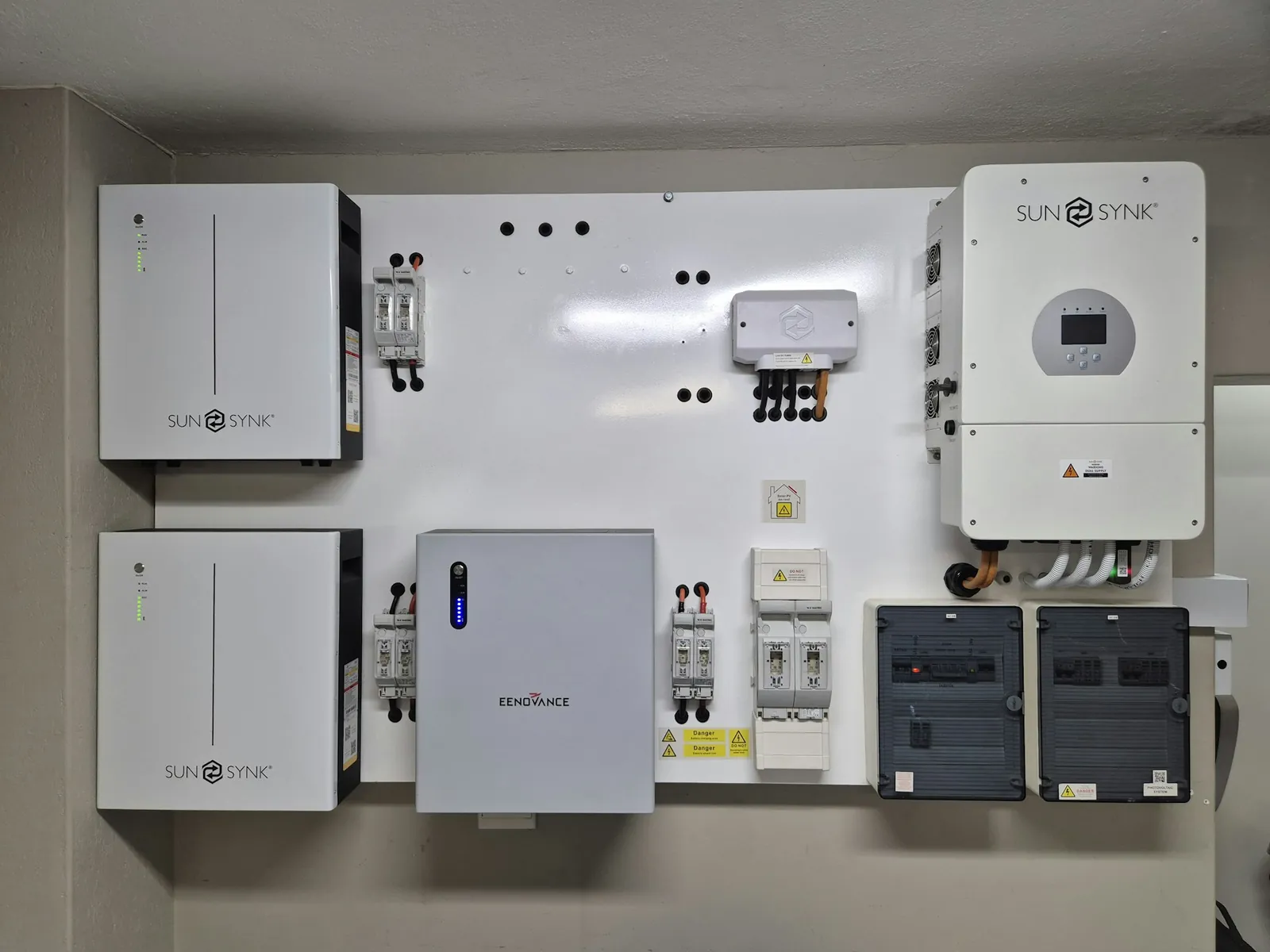
How battery storage fits with solar
Solar panels generate most when the house is often empty and demand is low. Without storage, surplus electricity is exported to the grid. A battery captures some of that surplus and releases it when you need it, which increases the share of your solar generation that you use yourself. This is called self-consumption.
Batteries can also be charged from the grid, for example overnight on a time-of-use tariff, and discharged at more expensive times. For businesses, storage can help manage peak demand and make better use of on-site generation. The benefit is real but not universal, so we start with your usage data rather than with a product.
Benefits and practical considerations
Benefits
- Use more of your own solar generation instead of exporting it.
- Move electricity use away from higher-priced periods where your tariff allows.
- For businesses, potentially reduce demand peaks and improve use of on-site generation.
- Retrofit is often possible on an existing solar system.
Things to consider
- A battery adds cost and may take many years to repay itself, if it does so at all. It depends on usage, tariff and equipment.
- Usable capacity is lower than the headline figure, and there are small energy losses each time electricity is stored and released.
- Most batteries do not provide power during a grid outage unless the system is specifically designed for it.
- Batteries need a suitable, well-ventilated location, and not every property has one.
What we help with
How we approach it
Understand demand
We review your electricity use and tariff, and whether you already have solar.
Test the case
We compare options, including no battery, and explain what each would be expected to change.
Specify the system
You receive a clear specification covering capacity, power rating, compatibility and location.
Install and set up
Installation, commissioning and configuration, followed by a walk-through of the app and settings.
Backup power: what you should know
- Not automatic
- A solar and battery system does not usually keep your home powered in a power cut. Grid-connected inverters are designed to switch off for safety when the grid fails.
- Backup needs specific equipment
- Backup requires a compatible inverter or gateway and a separate backed-up circuit. It adds cost and design work.
- Limited loads
- Backed-up circuits normally cover selected essentials such as lighting and a few sockets, rather than the whole property.
- Capacity and power limits
- A battery can only supply loads up to its power rating, and only until it is discharged.
- AC and DC coupling
- AC-coupled batteries are often easier to add to existing solar. DC-coupled systems can be efficient in new installations using a hybrid inverter.
- Typical domestic sizes
- Home batteries commonly range from around 5 kWh to over 13 kWh of storage. The right size depends on evening and overnight demand.
Common questions
Read all FAQsFor some households it is, particularly those with high evening usage, a time-of-use tariff or a wish to reduce exports. For others the extra cost outweighs the benefit. We will show you the reasoning rather than a blanket recommendation.
Often yes. Compatibility depends on your inverter, system age and layout. We check the existing equipment before recommending a solution.
Not unless the system is designed for it. Many batteries do not provide backup. If backup matters to you, tell us early so that it can be designed in.
Domestic batteries are manufactured to safety standards, and installation location and method matter. We follow the manufacturer’s instructions and recognised industry guidance when choosing where to install.
Related services
- Solar Panel InstallationDesign and installation of solar PV for homes, from roof assessment to commissioning and handover.
- EV Charger InstallationHome and workplace electric vehicle charge points, with attention to electrical suitability and compatibility.
- Solar System ConsultationA free, no-obligation conversation and feasibility review before any decision is made.
Ready to talk about battery storage?
Book a free, no-obligation consultation and we will talk through what is realistic for your home or business.