
Commercial solar installations, planned around your operations
For businesses, the case for solar rests on daytime demand, a suitable roof and a clear understanding of the project. We help you test each before you commit.
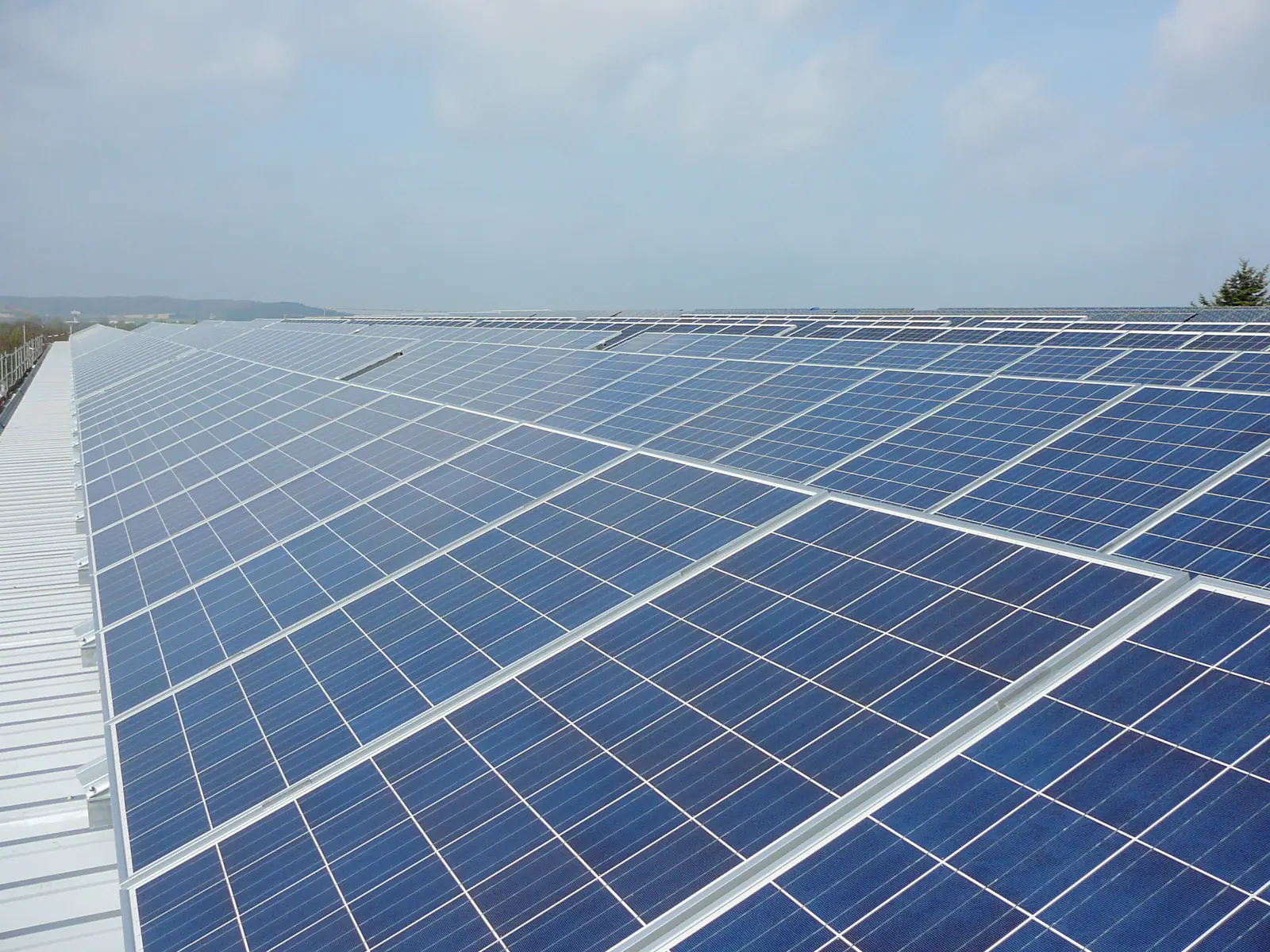
Commercial solar PV in practice
Commercial solar works on the same principle as domestic solar, at a different scale. Panels on a roof generate electricity that is used first by the building, reducing what the business buys from the grid. Systems typically range from a few tens of kilowatts on a small unit to hundreds of kilowatts or more on large industrial roofs.
The economics are driven by how much of the generation the premises can use directly. Offices, warehouses, cold stores, light industrial units and farms that consume electricity during daylight hours are often well placed. Premises that use most power overnight may see less benefit without storage.
Suitable buildings include offices, warehouses, industrial properties, retail units and other commercial premises with adequate roof space.
What we look at
Business electricity consumption
Bills, half-hourly data and operating patterns show when you use power and what could be met from the roof.
Site assessment
A survey of roof area, access, structure, existing equipment, electrical infrastructure and any constraints on the site.
System sizing
Matching the size of the array to demand, available area and grid connection limits, rather than maximising capacity for its own sake.
Roof suitability
Roof type, age, loading, covering materials, fragility and drainage, and how the system would be mounted without compromising the roof.
Operational considerations
Safe access, working around staff and deliveries, fire safety, insurance, future roof maintenance and the need to keep the business running.
Maintenance requirements
Monitoring, periodic inspection and cleaning where justified, to protect performance over the life of the system. About maintenance
Potential financial benefits
Using electricity you generate can reduce the amount you buy from your supplier, and surplus exported to the grid may earn payment under an export arrangement. For some businesses, the tax treatment of the investment may also be relevant. These effects depend on your tariff, usage, ownership structure and tax position, and we do not promise any particular saving or payback period.
We set out the assumptions behind any estimate, including consumption, generation, tariff and degradation, so your finance team can test them. For tax or accounting questions, please take advice from your accountant.
The consultation process for businesses
Initial conversation
We discuss your premises, your usage and what you are hoping to achieve.
Data and desk review
We review consumption data, roof imagery and any existing drawings or surveys.
Site survey
We visit to assess roof, structure, access and electrical infrastructure.
Proposal
You receive a written proposal covering design, estimated generation, assumptions, programme and the approvals needed.
Commercial solar questions
Read all FAQsIt depends on its structure, covering, age, orientation and available area. Some materials, such as fibre-cement roofing that may contain asbestos, need specific surveys and handling. We assess roof condition early, because it often determines whether a project is viable.
We look at your half-hourly or monthly electricity consumption, the profile of your demand through the working day and week, and the roof area available. The aim is usually to match generation to daytime use, rather than to fill every square metre.
Often, yes. Larger systems typically need approval from the Distribution Network Operator before installation, and the available capacity on the local network can influence what is possible.
Landlord consent and lease terms are important. We recommend raising the project with your landlord early, and we can supply technical information to support that conversation.
Ready to explore solar for your premises?
Book a free consultation and tell us about your site. We will talk through what is realistic for your business.