
Solar panel cleaning, only when it is genuinely worthwhile
In much of the UK, rainfall does a good job of keeping panels clean. Some sites are the exception, and for them careful professional cleaning can help.
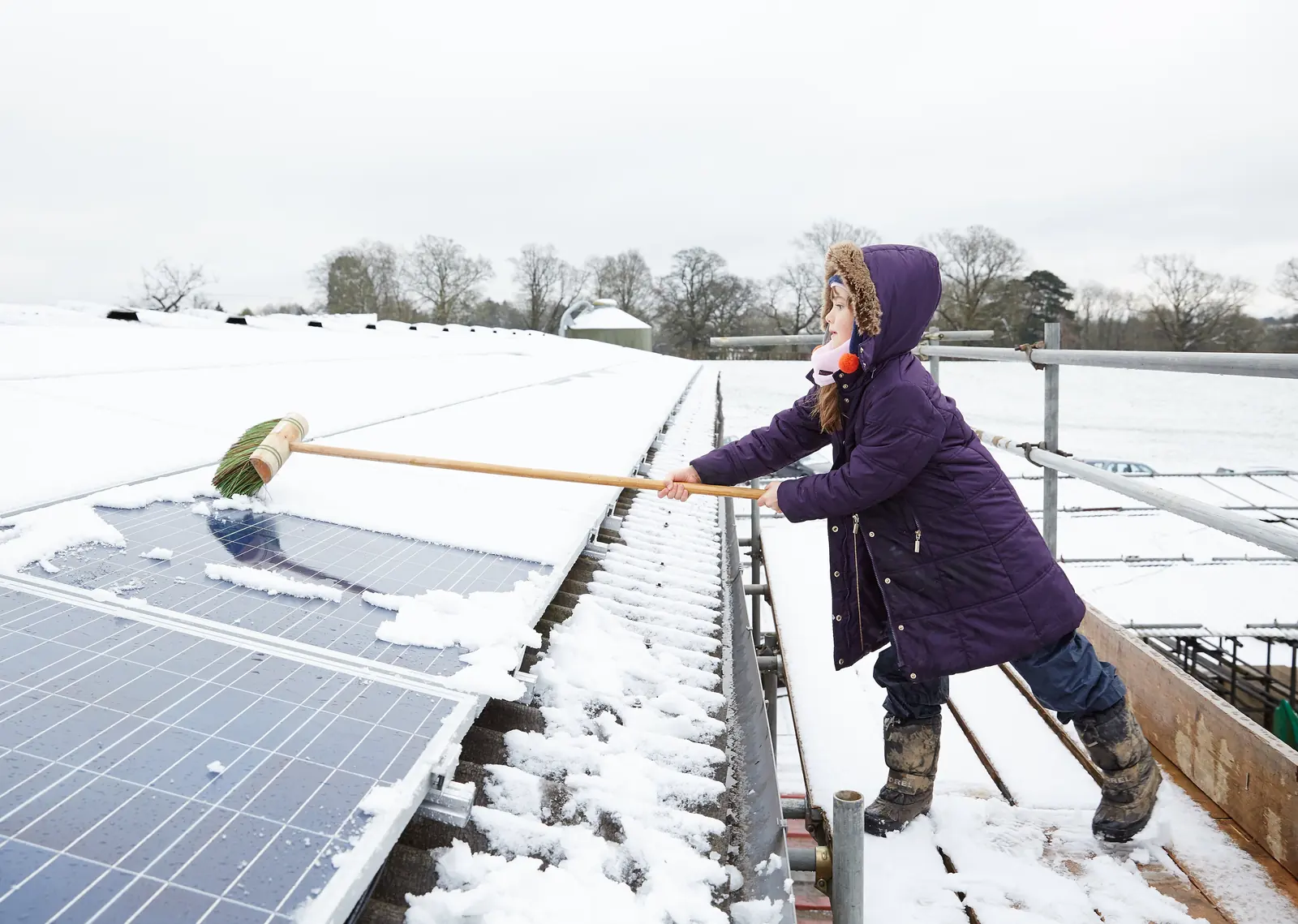
When cleaning helps and when it does not
Panels that are tilted and exposed to regular rain are largely self-cleaning, and many homeowners never need to have them cleaned. The picture is different where debris accumulates faster than rain removes it: beneath trees, near farmland or roads, close to the coast, on shallow roof pitches, or where birds roost.
We do not recommend frequent cleaning as a routine, and we will tell you if we think it would be money wasted. Where it is justified, we use methods that clean effectively without scratching glass, damaging seals or invalidating warranties.
Benefits and practical considerations
Benefits
- Can restore output where heavy soiling or shading from debris is reducing generation.
- Safer than attempting roof or ladder access yourself.
- Helps maintain clear drainage at panel edges, where dirt can build up into a frame of grime.
- An opportunity to spot minor defects early.
Things to consider
- The improvement depends on how dirty the panels are. For lightly soiled panels, the gain may be small.
- Incorrect cleaning can cause damage. Pressure washers, abrasive pads and strong detergents should be avoided.
- Cleaning in hot sunshine can leave marks, so timing matters.
- Check your manufacturer’s guidance, as some specify cleaning methods or limits.
What the service includes
How cleaning works
Initial conversation
You tell us about the site and what you have noticed. We review monitoring data if you have it.
Quotation
If cleaning appears worthwhile, we set out the method, access arrangements and price.
Cleaning visit
Cleaning is carried out in suitable weather using appropriate methods and access equipment.
Follow-up
We note any findings and, where possible, compare output afterwards.
Practical guidance
- Tilt and self-cleaning
- Steeper panels shed dirt more easily. Shallow pitches, and the lower edge of panels, tend to hold more debris.
- Bird droppings
- Localised soiling can disproportionately reduce output from a string. It is worth cleaning if it has built up.
- Water quality
- Purified water leaves fewer mineral deposits than tap water on glass as it dries.
- Avoid DIY at height
- Roof work is a leading cause of serious falls. Please do not climb onto roofs or lean from ladders to clean panels.
- Frost and cold glass
- Never use hot water on cold panels. Thermal shock can damage glass.
Common questions
Read all FAQsOften, not at all. Many systems in the UK are kept adequately clean by rain. If your site is prone to heavy soiling, an occasional clean may be sensible, and we can help you judge when.
Cleaning from the ground with a soft brush on a water-fed pole may be possible for some arrays. We do not recommend working on roofs or at height without proper training and equipment.
It can, if the wrong method is used. Follow the manufacturer’s guidance, and ask us to follow it too.
Related services
- Solar Panel MaintenanceInspections, performance monitoring and preventive checks to help a system keep generating as designed.
- Solar Panel RepairsDiagnosis and repair of inverter faults, damaged components, wiring issues and underperformance.
- Solar Panel InstallationDesign and installation of solar PV for homes, from roof assessment to commissioning and handover.
Ready to talk about solar panel cleaning?
Book a free, no-obligation consultation and we will talk through what is realistic for your home or business.